



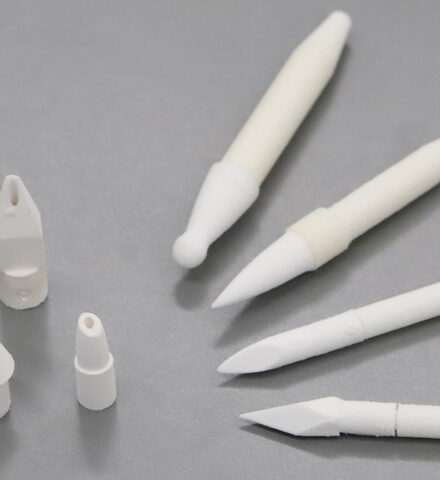

What is Porous Plastic? Structure, Functions and Uses
What is porous plastic?
Porous materials have a three-dimensional network of pores, or cells, inside them. When the walls between adjacent cells are partially open, the material is called open cell. Air and liquids pass through it, while particles are trapped. Sponges, pumice stones, wood and paper are all open cell materials in everyday life.
Open cell porous plastics use that structure for absorption, application, diffusion, filtration, venting and wicking. They appear in products across stationery, electronics, industrial equipment and construction.
What the pores actually do
The pores work as a reservoir. The material takes up a liquid such as oil or ink, holds it inside, and releases it onto the surface it touches. Because the release happens only through the open pores at the surface, the amount applied stays consistent and the liquid does not drip.
Open cell porous plastics use that structure for absorption, application, diffusion, filtration, venting and wicking. They appear in products across stationery, electronics, industrial equipment and construction.
Four functions in one material
| Function | What it means |
| Absorb | Takes up oil, ink and chemical solutions and holds them inside |
| Apply | Releases a controlled amount onto the target without dripping |
| Vent | Lets air and gas pass through |
| Wipe | Picks up oil, fine dust and residue from a surface |
The balance between these is set by the pore size and the porous structure. A structure designed for a long application lifetime is different from one designed for a small, precise amount. This is why each product is designed for its application rather than sold from a fixed specification.
Shapes it can take
Sheets, rolls and tubes are produced by extrusion. Complex three-dimensional shapes, including small parts, are produced by injection moulding. Grinding, assembly with other parts, two-layer structures with different pore sizes, and surface processing that closes the pores in a pattern are available as secondary operations.
Surface processing is worth noting. Closing the pores in a dot pattern lets the material apply a very small amount of oil, or transfer text and images onto an object, because the liquid only comes through where the pores remain open.
Where it is used
In industry, porous plastic is built into machinery as a lubricating oil applicator, used in marking devices, and used as an absorbent or rust-preventing part. In consumer goods, it is the nib in markers and writing instruments, and the printing face material in pre-inked stamps.
We began developing porous plastic in the 1970s with polyethylene as the base material, and established the manufacturing technology behind flash foam for pre-inked stamps and porous nibs for art markers. Both are still supplied to the stationery industry worldwide today.