


What Is a Pre-Inked (Flash) Stamp? Types and How It Is Made
Pre-inked stamps let you stamp again and again without an ink pad.
This article explains how pre-inked stamps work, the differences between the two types (relief type and flat type), and how each is made, using comparison tables.
What is a pre-inked stamp?
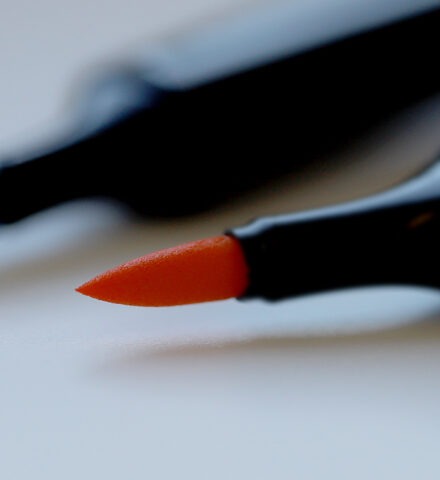
A pre-inked stamp is a stamp with ink stored inside the stamp surface (the text part), so you can stamp repeatedly without an ink pad. The ink absorbed inside the stamp surface seeps out little by little each time you press it. Pre-inked stamps made with a flash machine are also called “flash stamps”.
They are widely used for company stamps, address stamps, date stamps and other jobs where you stamp the same image many times.
The two types of pre-inked stamps
There are two types of pre-inked stamps, depending on the structure of the stamp surface: the relief type and the flat type.
| Relief type | Flat type | |
|---|---|---|
| Material | Rubber, etc. | Porous plastic |
| Stamp face | Raised and recessed | Flat, with no raised parts |
| Fine text and photos | Difficult (spreads when pressed hard) | Good (stays sharp even when pressed hard) |
| Durability | Wears easily; dirt collects in the grooves | Highly resistant to wear; long-lasting |
| Stamping consistency | The imprint changes with pressure | Consistent imprints |
The relief type has a traditional structure. Its weak points are that the imprint changes with how hard you press, and dirt collects in the grooves. The flat type uses porous plastic and has no raised parts, so it reproduces fine text, line art and even photos clearly, and stamps consistently.

How pre-inked stamps are made
The two types are made in very different ways.
| Type | Raw material | Steps to make the stamp face | Machine | Main makers |
|---|---|---|---|---|
| Relief type | Rubber, etc. | Molding → removing additives → drying → ink filling | Press, etc. | Stamp manufacturers |
| Flat type | Porous resin | Making the stamp face → ink filling | Desktop flash machine | Stamp shops, etc. |
The relief type needs many steps, so it suits mass production and is made by stamp manufacturers. The flat type can be processed at low temperatures. A “flash machine” with a built-in lamp creates the stamp face, so stamp shops and stationery stores can easily make these stamps on site.
Where the lamp’s light reaches the foam through the design film, the pores on the surface melt and seal. After the foam is filled with ink, ink comes out only through the open pores and not through the sealed areas.
Why is the flat type chosen?
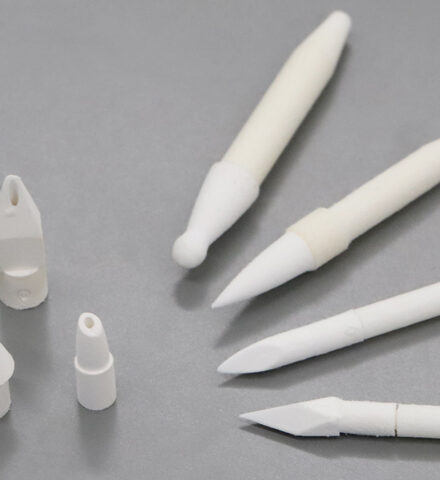
The heart of the flat type is porous plastic with fine, interconnected pores.
- Ink held inside seeps out evenly by capillary action → consistent imprints
- No raised parts, so fine text, logos and photos are reproduced clearly
- Highly resistant to wear and long-lasting
▶ New to porous materials? See also: Porous Plastic Explained
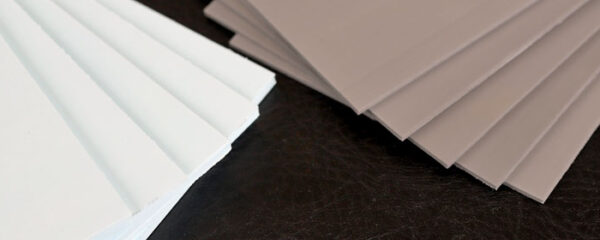
Yamahachi stamp foam for pre-inked stamps (flat type)
We manufacture and sell flat-type stamp foam (flash foam) for pre-inked stamps, using PE (polyethylene) as the base material.
Summary
- A pre-inked stamp has built-in ink, so you can stamp repeatedly without an ink pad
- There are two types: the relief type (rubber) and the flat type (porous plastic)
- The flat type reproduces fine text and photos clearly, lasts long and stamps consistently
- The flat type is easy to process and is made in stamp shops
“We want to make this kind of stamp.” “We would like samples of stamp foam.” Please feel free to contact us.
▼ Inquiries
We supply stamp foam for pre-inked stamps. Product page: Flash foam stamp pad
| For further information or request, please CONTACT US |